
Creating Engaging Content for LinkedIn Company Pages
Creating Engaging Content for LinkedIn Company Pages: Practical Strategies and AI-Enabled Workflows

LinkedIn company pages need content that informs, inspires and converts a professional audience. By “engaging content” we mean posts that stop the scroll, spark interaction and feed a measurable lead pipeline. This guide explains what consistently works on company pages, why certain formats outperform others, and how AI can speed ideation, personalisation and conversion without losing authenticity. Many marketing teams struggle with consistency, relevance and connecting engagement to qualified leads; we address those gaps with ready-to-use templates, repeatable workflows and measurement frameworks. You’ll get page-specific content ideas, step-by-step post recipes, optimisation checklists, and concrete ways AI helps turn attention into qualified prospects. The guide also covers KPIs, AI-driven A/B testing, 2025 trends like video-first formats, and ethical guardrails for using AI responsibly. Wherever relevant, we point to tools that bridge engagement and lead qualification while keeping education first.
What LinkedIn Content Ideas Actually Boost Company Page Engagement?
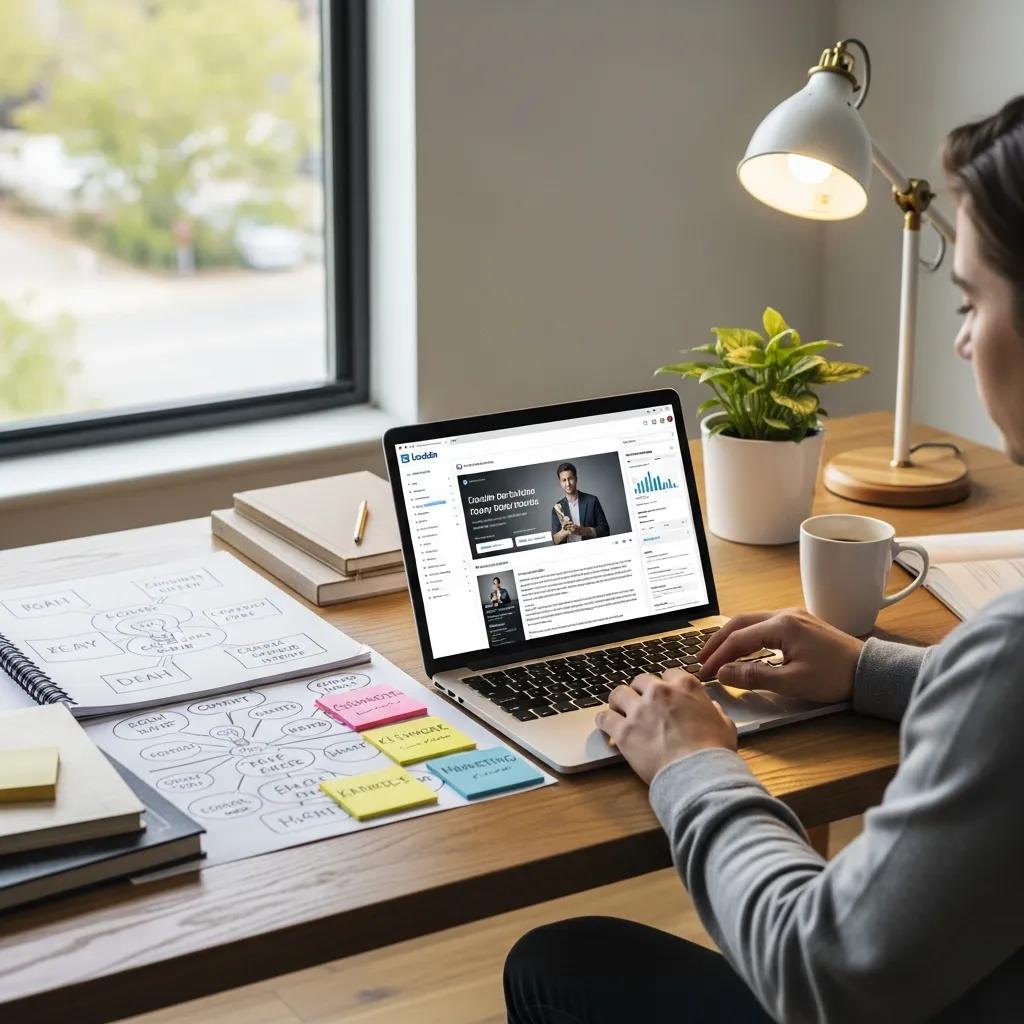
Top-performing company-page content combines relevance, credibility and interactive elements that prompt comments, shares and clicks. Formats that tell a short story and end with a clear professional takeaway tend to do best. Use your company expertise, customer outcomes and employee voices to build trust, then invite participation through polls or calls for insight. Below are practical content concepts you can publish immediately, each aligned to common objectives like awareness, thought leadership and lead generation.
Effective content ideas for company pages include:
- Short thought-leadership summaries that highlight a distinct viewpoint and link to next-step resources.
- Customer success snapshots that show measurable outcomes and the lessons learned.
- Employee spotlights or behind-the-scenes posts that humanise your brand and attract talent.
- Targeted polls that ask a specific industry question to gather insights and spark discussion.
- Sharp explainer clips that solve one common customer problem in under 90 seconds.
These formats work because they pair professional relevance with a low barrier to engage, and they naturally set up follow-ups like downloadable guides or conversational outreach. Moving from idea to execution requires repeatable workflows — the next section shows how AI can generate and refine content ideas at scale.
How Can AI Help Generate Creative LinkedIn Content Ideas?
AI surfaces content ideas by analysing audience signals, trending topics and past post performance to produce targeted prompts and draft posts that match your voice and goals. A typical workflow starts with audience segmentation inputs, then uses prompt templates to request hooks, supporting points and CTAs tailored by role or industry. For example, a prompt such as “three post hooks for CFOs about cost-saving automation” can return multiple hook options, a 100-word post and suggested hashtags you then humanise. Combining AI ideation with a human edit loop preserves tone and accuracy while cutting time to publish. This approach scales ideation across posts, articles, polls and video scripts so teams keep a consistent calendar without losing relevance.
Which Content Formats Drive the Strongest Engagement on LinkedIn?
Certain formats consistently outperform others because they capture attention, invite interaction and deliver clear value. Video typically leads engagement thanks to motion and audio that stop the scroll, while polls invite direct participation and extend reach through comments. Long-form articles still matter for thought leadership and discovery, and image-led posts work well for concise announcements or stats. The table below compares core formats by engagement potential, ideal length and recommended CTA to help you choose what to publish.
Below is a comparative table of content formats and their attributes.
| Format | Typical Engagement Multiplier | Ideal Length / Type | Recommended CTA |
|---|---|---|---|
| Video | High | 30–90 seconds for clips; 3–6 minutes for deeper explainers | "Watch to learn" or "Share your view" |
| Poll | Medium-High | Single question, 2–4 options | "Vote — then tell us why in comments" |
| Article | Medium | 800–1,500 words | "Download the full guide" or "Subscribe" |
| Image/Post with stat | Medium | One strong visual + 40–120 words | "Comment with your experience" |
Pick the format that matches your objective: awareness favors short video and polls, thought leadership favors articles, and lead capture pairs best with video or articles plus a clear next step. Which leads naturally to how you actually write the post — covered next.
How Do You Write LinkedIn Posts That Resonate and Convert?
High-impact LinkedIn posts follow a simple structure: a scroll-stopping hook, clear value in the body, credibility signals and a single, direct CTA. The hook must show relevance in the first sentence; the body should offer 1–3 actionable insights or a tight story; the CTA should match the post’s intent — invite comments, link to an asset or request a demo. Tone should be professional but conversational, with outcome-focused language that speaks to B2B audiences. Below is a compact checklist and practical steps you can apply to your next post.
Follow this structure for every post:
- Hook: Open with a specific problem or surprising stat in one line to stop the scroll.
- Value: Give 1–3 concise insights, data points or a micro-story that addresses the problem.
- Credibility: Add social proof, brief metrics or a named example to build trust.
- CTA: Close with one clear action — comment, download, sign up or request a demo.
Using this structure makes posts scannable and persuasive, and it sets the stage for personalisation techniques (below) that increase relevance for target segments.
What Makes Personalised Messaging Work on LinkedIn?
Personalised messaging depends on segmentation, relevance, specificity and a human tone that avoids robotic phrasing. Useful variables include industry, role, recent activity (posts, funding), geography and specific pain points; mixing two or three of these makes a message feel bespoke. Templates should include placeholders, but every automated message needs a light human edit — one personal detail or question preserves authenticity and improves reply rates. Use dynamic fields in automation tools to scale personalisation, and always end with a clear, professional CTA that aligns with the recipient’s likely next step. These practices prepare you to add multimedia, which amplifies personalised storytelling.
How Should You Use Multimedia and Video Effectively?
Multimedia and video increase clarity and dwell time when produced with tight framing, captions and mobile-first formatting. For B2B, aim for 30–90 second insight clips or 2–6 minute customer stories and demos; always include captions since many viewers watch without sound. Nail the thumbnail and the opening three seconds — start with a compelling question or stat to retain viewers. Repurpose long-form assets into short clips, quote cards and carousel posts to extend reach while keeping a consistent message. A simple production checklist — headline, three key points, one CTA, captions and a thumbnail — makes output repeatable and effective for company pages.
How Do You Optimise Your LinkedIn Company Page for More Engagement?
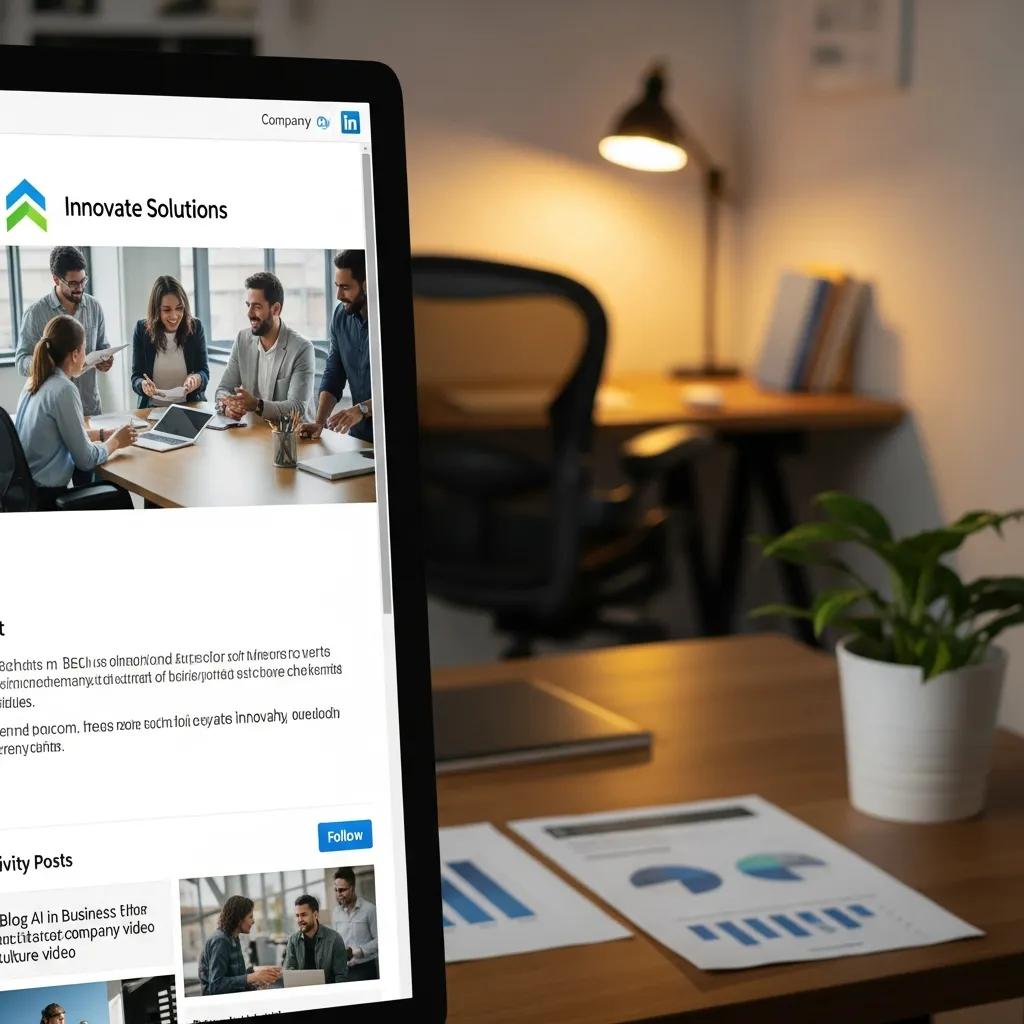
Optimising a company page blends on-page SEO, compelling brand assets and a steady content cadence that aligns with audience needs and discoverability. Complete profile fields — headline, about with keywords, services — so LinkedIn understands your business and surfaces your content to relevant searches. Use a clear logo and a banner that communicates your value, and pin a high-value post to guide new visitors. Below is a concise checklist followed by timing, scheduling and targeting tips to maximise reach.
Key optimisation checklist:
- Complete the about section with target keywords and a succinct value proposition.
- Use a branded banner and clear company logo for instant recognition.
- Pin a high-value post or resource as a featured update.
- Maintain a baseline cadence and use audience targeting where available.
These page-level steps boost discoverability and set follower expectations, and they link directly to how often and when you should post — covered next.
What Posting Frequency and Timing Works Best for Company Pages?
A solid starting cadence is three to five posts per week, which balances consistent visibility with content quality. Timing often clusters around mid-week mornings in your target time zones, but test to find what works for your audience. Match frequency to goals: awareness benefits from regular presence, while lead-focused content should be less frequent but stronger in CTA and supporting assets. Run A/B tests on post times and formats to find your optimal windows, then scale the winners. Also adjust cadence by format — videos deserve fewer, higher-impact slots, while polls can be used more often to sustain engagement.
How Do Hashtags and Audience Targeting Improve Reach?
Hashtags and audience targeting make your posts discoverable by topic streams and place content in front of defined professional segments. Use three to five hashtags per post: one niche tag, one broad category tag and one campaign-specific tag to balance reach and relevance. For company pages with audience targeting enabled, choose industry, company size or job function to match the intended readers and reduce noise. Tools that surface trending industry hashtags help you stay topical and can be paired with monitoring to spot emerging themes. Smart hashtag and targeting use turns broadcast into precision distribution, which makes downstream outreach and scoring more efficient.
When planning targeting and cadence, automation tools can handle scheduling and follow-ups; later we show an AI-first example of how automation links content engagement to lead qualification.
How Does AI Improve LinkedIn Lead Generation from Content Engagement?
AI boosts LinkedIn lead generation by personalising follow-up based on engagement signals, scoring prospects for qualification and automating follow-ups to prevent drop-off and scale outreach. The flow is straightforward: content engagement emits behavioural signals, AI combines those with profile fit to calculate a lead score, and automation sequences route high-priority prospects to human follow-up. Personalisation, scoring and automation each play a distinct role — together they convert passive engagement into scheduled conversations and measurable pipeline. Understanding these roles helps you prioritise tooling and process design.
To illustrate AI in practice: Nigel the AI demonstrates how an AI Sales Rep for LinkedIn can educate potential users about capabilities and value, encouraging exploration or adoption. Nigel: AI Sales Rep for LinkedIn Lead Generation pairs automated, personalised outreach with AI-driven qualification, 24/7 availability and follow-up — a cost-effective way to emulate an elite outbound team without adding headcount. With such a system, marketing can route scored prospects into tailored cadence workflows while sales focuses on the highest-value conversations. This example shows how AI links content engagement to conversion while keeping strategy and measurement central.
What Role Does AI Lead Scoring Play in Qualifying LinkedIn Prospects?
AI lead scoring automates prioritisation by blending profile-fit signals, engagement behaviour and contextual intent into a single score that predicts qualification better than manual rules. Common signals include firmographics (industry, company size), role relevance (decision-maker titles), engagement depth (comments, downloads, replies) and timing (recent hires or funding). The table below contrasts scoring elements and outcomes to show how AI improves prioritisation and SDR efficiency.
Below is a comparison of lead scoring approaches and their attributes.
| Scoring Component | Attribute | Typical Outcome |
|---|---|---|
| Profile Fit | Industry, role, company size | Filters for ICP alignment |
| Engagement Signals | Likes, comments, content downloads | Indicates interest level |
| Behavioural Signals | Message responses, meeting requests | Signals purchase intent |
| AI vs Manual | Weighting granularity | AI applies dynamic weights for sharper prioritisation |
AI lead scoring cuts false positives and surfaces high-value contacts earlier, enabling more targeted follow-ups and higher conversion. Once prospects are scored, automated follow-ups can keep the conversation warm without adding manual steps.
How Do Automated Follow-Ups Turn Engagement into Meetings?
Automated follow-ups convert engagement into meetings by keeping contact timely, context-aware and escalating to human reps when thresholds are met. A best-practice cadence includes an initial personalised message, a brief value-add follow-up after 3–5 days, and a final reminder before pausing; every message references the prior engagement to preserve continuity. Automation rules should include escalation triggers — for example, a reply or meeting request prompts immediate handover to a human. Non-responders are archived after a defined sequence to avoid fatigue. Measure sequence effectiveness by response rate, meeting conversion and time-to-meeting, then iterate copy and timing with A/B testing. These workflows free sales to handle qualified conversations while ensuring engagement doesn’t go cold.
To see AI-led conversion in action, consider requesting a demo or signing up for a guided trial to observe how automation and scoring perform with your content and audience.
How Should You Measure and Optimise LinkedIn Content Performance with AI?
Measuring LinkedIn performance requires tracking leading and lagging KPIs, mapping them to business outcomes and using AI to extract insights at scale that guide iterative tests. Define primary metrics — impressions, engagement rate, CTR and conversion rate to qualified conversations — and link each to a target outcome like awareness, pipeline value or booked meetings. AI can automate anomaly detection, surface content themes that correlate with conversions and recommend rollout strategies for winners. The section below lists core KPIs and explains how AI speeds A/B testing and optimisation.
Key KPIs to track for company content include:
- Impressions to measure reach and visibility.
- Engagement rate (interactions ÷ impressions) to assess resonance.
- CTR to assets or landing pages for top-of-funnel interest.
- Conversion rate to meetings or qualified leads for business impact.
Consistent KPI tracking helps you connect content to pipeline outcomes and set realistic improvement targets. The table below maps each KPI to measurement method and how AI can augment interpretation and action.
| Metric | Definition | How AI Improves Measurement |
|---|---|---|
| Impressions | Number of times content shown | Trend detection and audience lift analysis |
| Engagement Rate | Interactions / Impressions | Segment-level drivers and content element attribution |
| CTR | Clicks / Impressions | Predictive signals for likely converters |
| Conversion to Meeting | Meetings / Clicks or Leads | Scoring and attribution to optimise effort |
AI-powered dashboards can flag underperforming content elements and recommend copy or timing tweaks; they also help scale winners across formats while preserving message coherence. With clear metrics, build an A/B testing framework to validate hypotheses — explained next.
How Can AI-Driven Insights and A/B Testing Improve Your Content Strategy?
AI helps design and analyse A/B tests by suggesting variants, estimating sample sizes and surfacing statistically significant winners faster than manual analysis. Start with a clear hypothesis — for example, “short video with a stat increases CTR vs. long article” — define success metrics and randomise exposure across comparable audiences. AI can monitor interim results, reallocate traffic to promising variants and recommend full rollout when confidence is high. Avoid small sample sizes and testing multiple variables at once; instead test one primary variable at a time and use AI to control for confounders. Scaling winning variants across the calendar then becomes a repeatable path to continuous improvement.
What Are the Must-Follow LinkedIn Tips for 2025?
In 2025, LinkedIn favors short, high-value video, interactive posts and AI-assisted personalisation that preserves human authenticity. Prioritise formats and workflows that combine speed with nuance. Video clips and polls capture attention, while AI tools accelerate ideation and testing — but they require ethical guardrails to keep trust intact. Best practices include human-in-the-loop edits for AI drafts, tying KPIs to business outcomes, and transparent AI use where appropriate. The goal: scale content without losing the professional norms that make LinkedIn effective.
Why Is Video Dominating LinkedIn Engagement in 2025?
Video dominates because it conveys personality, shows product value quickly and increases time on content — a behaviour the algorithm rewards. Short, captioned clips with a strong opening hook perform best and are easily repurposed across posts and ads. Workable B2B video types include explainer clips, customer testimonials and concise demos; each should finish with one clear professional CTA. Repurposing long interviews into short episodes and quote clips multiplies output while keeping the message consistent. A video-first approach needs simple production standards and a cadence matched to your audience’s consumption patterns.
What Ethical Rules Should Guide AI Use for LinkedIn Content?
Ethical AI use on LinkedIn centers on transparency, authenticity and data privacy to protect trust and meet platform expectations. Disclose meaningful AI assistance when relevant, don’t fabricate endorsements or claim human authorship where it’s not true, and ensure any personal data used for personalisation complies with privacy rules. Keep humans reviewing AI output to avoid factual errors or misleading claims, and set internal policies that define acceptable AI use. These practices protect reputation and build sustainable engagement by showing respect for your audience and the platform.
This guide covered ideation, formats, post structure, page optimisation, AI-driven conversion and measurement so you can build a resilient LinkedIn company-page strategy that engages and converts. Use these frameworks and tables to plan experiments, apply AI with human oversight, and measure results against clear KPIs as you iterate in 2025 and beyond.
Frequently Asked Questions
What are the best practices for using hashtags on LinkedIn?
Using hashtags effectively on LinkedIn involves selecting three to five relevant tags per post. Aim for a mix of one niche tag, one broad category tag, and one campaign-specific tag to enhance both reach and relevance. This strategy helps your content appear in topic streams and makes it discoverable to your target audience. Additionally, regularly monitor trending hashtags in your industry to stay current and adjust your strategy accordingly. This approach not only increases visibility but also connects your posts with the right professional segments.
How can I measure the success of my LinkedIn content?
To measure the success of your LinkedIn content, focus on key performance indicators (KPIs) such as impressions, engagement rate, click-through rate (CTR), and conversion rate to qualified leads. Impressions indicate reach, while engagement rate assesses how well your content resonates with the audience. CTR measures interest in your assets, and conversion rate tracks how many interactions lead to meetings or qualified leads. Regularly analysing these metrics allows you to refine your content strategy and improve future performance based on data-driven insights.
What types of content should I avoid on LinkedIn?
Avoid posting overly promotional content, as LinkedIn is a professional networking platform where users seek valuable insights rather than sales pitches. Content that lacks relevance to your audience or fails to provide actionable insights can also disengage followers. Additionally, steer clear of excessive jargon or complex language that may alienate your audience. Instead, focus on sharing informative, engaging, and authentic content that fosters discussion and builds relationships within your professional network.
How can I effectively repurpose content for LinkedIn?
Repurposing content for LinkedIn involves transforming existing materials into different formats to reach a wider audience. For instance, you can convert a blog post into a series of short video clips, infographics, or carousel posts. This not only maximises the value of your original content but also caters to various audience preferences. Ensure that each repurposed piece maintains a consistent message and aligns with your overall content strategy, while also being tailored to the unique characteristics of LinkedIn as a platform.
What role does audience segmentation play in LinkedIn marketing?
Audience segmentation is crucial in LinkedIn marketing as it allows you to tailor your content and messaging to specific groups based on factors like industry, job role, and interests. By understanding the unique needs and pain points of different segments, you can create more relevant and engaging content that resonates with each group. This targeted approach not only enhances engagement but also improves the likelihood of converting interactions into qualified leads, as your messaging will be more aligned with the audience's expectations.
How can I use analytics to improve my LinkedIn strategy?
Utilising analytics on LinkedIn helps you understand which content performs best and why. By regularly reviewing metrics such as engagement rates, impressions, and follower growth, you can identify trends and patterns in audience behaviour. This data-driven approach allows you to refine your content strategy, focusing on formats and topics that resonate most with your audience. Additionally, A/B testing different post types and timings can provide insights into optimal practices, enabling continuous improvement in your LinkedIn marketing efforts.
What are the benefits of using AI in LinkedIn content creation?
AI can significantly enhance LinkedIn content creation by streamlining the ideation process, personalising messaging, and optimising post performance. By analysing audience behaviour and engagement patterns, AI can generate tailored content suggestions that align with your brand voice and goals. Furthermore, AI-driven tools can assist in automating follow-ups and scoring leads based on engagement, ensuring that your outreach is timely and relevant. This integration of AI not only saves time but also improves the overall effectiveness of your LinkedIn marketing strategy.
Conclusion
Creating engaging LinkedIn company-page content raises brand visibility and drives interactions that can convert to qualified leads. By combining proven content strategies with AI-driven insights — and keeping humans in the loop — teams can scale outreach while staying authentic. Start applying these techniques to sharpen your LinkedIn presence and deepen audience engagement. Explore our resources for more practical tips and tools to maximise your content strategy.
